
How long does it take for concrete to dry out after a leak?

Understanding the Concrete Drying Process After a Leak

When concrete becomes saturated due to a leak, the drying period can vary widely based on factors such as humidity, temperature, and the extent of water damage. In many cases, a concrete surface may feel dry within a few days, but complete dryness throughout its depth could take longer. It is crucial to remember that surface dryness is not always an indicator of full moisture evacuation. Waiting too little time before sealing or repairing can lead to trapped moisture, potentially causing cracks or further structural concerns.

A notable aspect of this process is how effective foundation sealing methods can speed up recovery and prevent future leaks. If your leak stems from a cracked foundation wall, addressing the root cause should be a priority. Thorough repairs not only support faster drying but also provide long-term defense against repeated water intrusion. For example, if you suspect a compromised area in your basement, you might consider specialized techniques such as Foundation Wall Crack Repair to ensure reliable water protection.

Once the source of the leak is dealt with, you can accelerate the drying process by improving air circulation. Running fans or a dehumidifier can be highly beneficial, particularly if your basement or garage environment is prone to dampness. Avoid applying new coatings or attempting further repairs until you verify that the concrete has dried completely. Sealing or patching damp concrete may trap moisture, weakening the repair or leading to new cracks down the line.

In most home and commercial settings, a dryer climate and steady airflow can help concrete dry adequately within 24 to 72 hours, while total internal dryness may extend over a week or two. Keeping an eye out for subtle signs of lingering moisture—such as discoloration or a persistent musty smell—can give you a better picture of when it’s safe to proceed. If you are concerned about ongoing moisture issues or repeated leaks, an expert assessment can determine whether more robust interventions are necessary. For active water seepage through cracks, you might explore our Actively Leaking Cracks service.
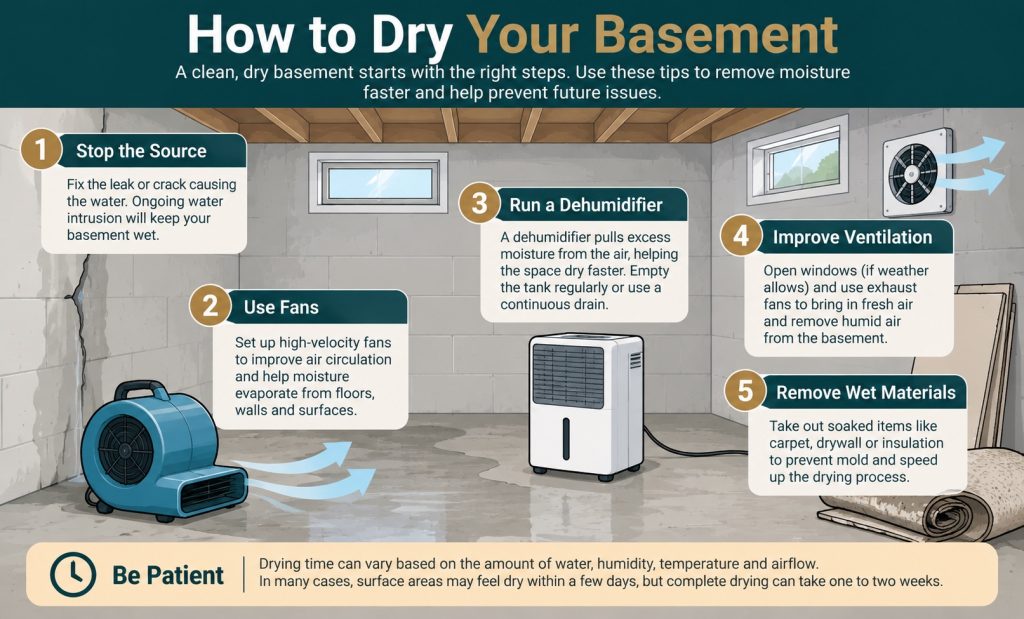
Infographic showing how to dry a wet basement using fans, a dehumidifier, ventilation, leak repair, and removal of wet materials.
Dry a wet basement by stopping the source of the leak, improving airflow, running a dehumidifier, ventilating the space, and removing saturated materials.

Ultimately, a careful blend of prompt repairs, thorough drying, and reliable sealing methods helps ensure your concrete remains structurally sound over time. Should you need professional guidance, feel free to contact us for further assistance or to arrange a foundation evaluation.

Related FAQs

How Polyurethane Injections Enhance Waterproofing Polyurethane injections are a highly effective method for improving foundation waterproofing. By injecting specialized polyurethane foam into cracks or gaps in the concrete, these injections create a robust seal that keeps water out and prevents further damage. Unlike some traditional exterior repair methods, polyurethane injections are done from inside the […]

Sealing Your Foundation from the Inside: Key Insights Many property owners wonder if it’s possible to seal a foundation from inside the home or building. The short answer is yes. Interior foundation sealing involves addressing cracks, gaps, and other weak points without the need for disruptive exterior excavation. This can be done by injecting advanced […]

Effective Steps to Stop Water From Entering Your Foundation Water intrusion can undermine your foundation’s stability and lead to costly repairs if not addressed promptly. Whether you live in an area with frequent rainfall or experience occasional heavy downpours, proper foundation sealing and preventative measures can help keep water out. 1. Improve Exterior Drainage Start […]

How to Address a Leaking Foundation Finding water seeping through your foundation can be concerning, especially if you’ve never dealt with the issue before. Luckily, modern repair techniques and proper foundation sealing strategies can help stop leaks in their tracks. The first step is to identify the source of the water. Look for visible cracks, […]

Detecting a Leak in Your Foundation When it comes to preserving your home’s overall stability, it is vital to perform a regular foundation integrity check. One of the most common threats to a strong foundation is hidden water infiltration. By detecting leaks early, you can avoid expensive repairs and protect the structural soundness of your […]

Repairing a Leaky Basement Wall Crack Addressing a leaky crack in your basement wall is key to preventing water intrusion, mold growth, and potential structural damage. Fortunately, interior repair methods provide effective, non-invasive solutions that seal cracks from the inside. This approach avoids costly exterior excavation while offering long-lasting protection for your property. Below, we […]